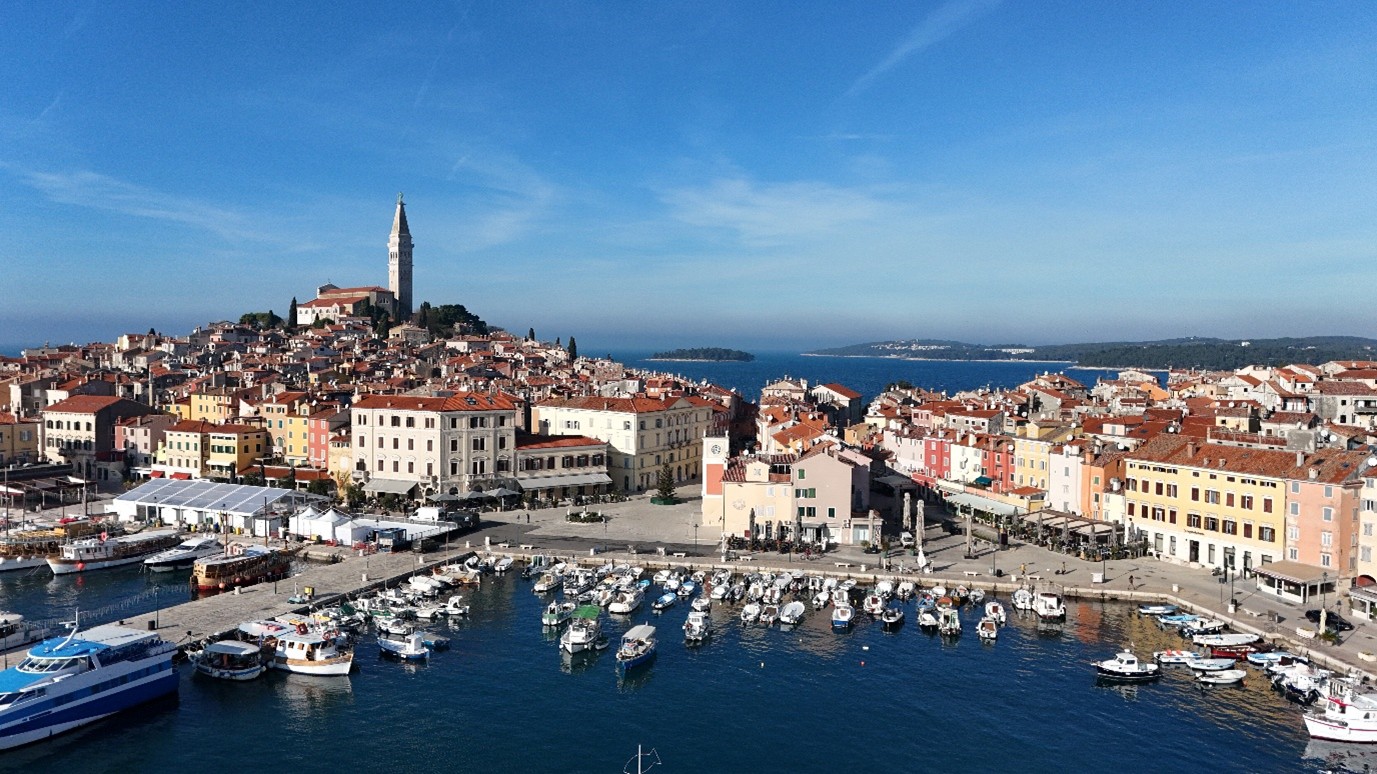
Over the past fifteen years, Rovinj, as well as Istria in general, has experienced a true renaissance and has become an exceptionally attractive destination both for tourism and for everyday living.
Considering the stunning views of historic towns and smaller places such as Rovinj, Novigrad, Motovun, Grožnjan, and many others—surrounded by preserved nature and the sea—it does not take much analysis to understand what attracts an increasing number of people to Istria, whether for holidays or permanent residence.
Below, we highlight some of the key factors that are encouraging more and more people to choose Istria as their place to live.
Key advantages of living in Istria
1. SECURITY
Globally, there is currently a strong sense of insecurity caused by wars, political instability, and rising crime in large urban areas. As a result, more and more people are considering moving to safer and more peaceful environments.
In this context, it is important to emphasize that Croatia is generally a very safe country. According to research by the Institute for Economics and Peace and its Global Peace Index, Croatia has consistently ranked among the 20 safest countries in the world in recent years.
Additionally, in international surveys on perceived safety, Croatia is often highlighted as a country where people feel very safe walking at night.
Within Croatia itself, Istria is considered one of the safest regions. There is still a strong sense of community and trust—many residents do not feel the need to lock their cars, parents feel safe allowing children to go to school on their own, and there is an overall strong sense of local community that contributes to safety.
2. CLIMATE
Istria boasts an exceptional microclimate characterized by mild winters and moderately warm summers, making it very comfortable to live in year-round.
Below are average values for the western coast of Istria and central (inland) Istria.
Western Istrian Coast
Sunny and rainy days
- approximately 125 – 140 fully sunny days per year
- approximately 80 – 100 rainy days per year
Temperatures
Winter
- lowest temperatures: 3 – 6 °C
- daytime temperatures: 8 – 12 °C
Summer
- highest temperatures: 27 – 31 °C
- night temperatures: 18 – 22 °C
Central / Inland Istria
Sunny and rainy days
- approximately 110 – 130 sunny days per year
- approximately 100 – 120 rainy days per year
Temperatures
Winter
- lowest temperatures: 0 – 3 °C
- daytime temperatures: 5 – 9 °C
Summer
- highest temperatures: 29 – 33 °C
- night temperatures: 16 – 19 °C
3. GEOGRAPHICAL LOCATION
Istria has an extremely favorable geographical position, as it is within a one-day drive of much of Central Europe.
From Istria, it is relatively easy to visit some of Europe’s most beautiful cities, such as Venice, Budapest, Ljubljana, or Vienna.
During the winter months, well-known Alpine ski resorts are also just a few hours’ drive away.
Closest major cities
| City | Distance | Driving time |
| Trieste | ~100 km | ~1 h 30 min |
| Ljubljana | ~180 km | ~2 h |
| Venice | ~240 km | ~3 h |
| Zagreb | ~250 km | ~3 h |
| Milan | ~500 km | ~5 h |
| Vienna | ~500 km | ~5–6 h |
| Munich | ~520 km | ~5–6 h |
| Budapest | ~550 km | ~6 h |
Nearest airports
In Istria
- Pula Airport – approx. 40 km from Rovinj
Nearby
- Trieste Airport – approx. 140 km
- Ljubljana Jože Pučnik Airport – approx. 200 km
Major international airports
- Venice Marco Polo Airport – approx. 250 km
- Zagreb Airport – approx. 260 km
- Milan Malpensa Airport – approx. 500 km
Distance to popular ski resorts
One of Istria’s unique advantages is its relative proximity to the Alps, allowing a combination of seaside living and winter sports.
Slovenia
- Kranjska Gora – approx. 170 km
Italy (Dolomites)
- Cortina d’Ampezzo – approx. 260 km
- Alta Badia – approx. 300 km
- Val Gardena – approx. 320 km
Austria
- Nassfeld – approx. 250 km
- St. Anton am Arlberg – approx. 430 km
4. “MEDITERRANEAN LIFESTYLE”
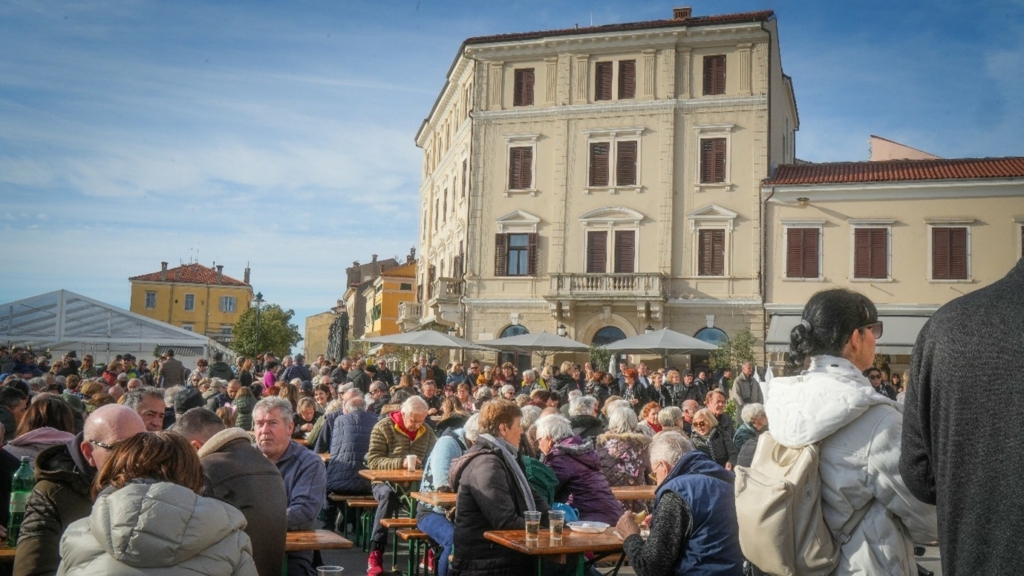
Finally, it is important to emphasize that while numbers and statistics can help when choosing a place to live, they are rarely the decisive factor.
Through our interaction with many clients who have chosen to live in Istria, we have concluded that their decision was largely influenced by something that cannot be measured in numbers—the so-called “ease of living in Istria.”
In Istria, as in much of Croatia, a slower and more relaxed lifestyle is still cherished. People value time spent with family and friends, long coffee breaks that often last for hours, casual meals that turn business meetings into friendly gatherings, and family get-togethers with outdoor barbecues.
Local food also plays a special role in everyday life: truffles, wild asparagus, fresh fish, Istrian prosciutto, sausages and ombolo, as well as top-quality local wines.
When it comes to quality of life, Istria often gives the feeling that time has slowed down just enough for people to pause and reflect on what truly matters in life.